Dental implants
Dental implants: which type is right for you
Dental implants come in more than one form. The right one depends on how many teeth you are missing and where the gaps are.
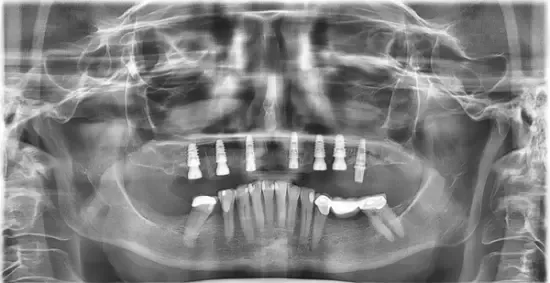
It starts with how many teeth you are missing
All implant treatments use the same idea: a titanium post that bonds with your jawbone and holds a replacement tooth or teeth. What changes is how many posts are used and what sits on top. Here are the three main types.
This is general education, not a diagnosis. Your exam and scans decide what is right for you.
Single-tooth implants
The most common type replaces one missing tooth. One implant post is placed in the jawbone. Once it has healed and bonded with the bone, a custom porcelain crown is attached to it. The crown restores your smile and your bite.
If you are missing several teeth in different parts of your mouth, such as a front tooth and a molar on the opposite side, you can have more than one single-tooth implant. Learn more on our single-tooth implants page.
Implant-supported bridges
When two or more teeth are missing side by side, an implant-supported bridge can be a good fit. A traditional bridge hangs from crowns placed on the healthy teeth beside the gap. An implant-supported bridge is anchored by implants instead, so your natural teeth are left alone.
Because a few implants can support several teeth, this approach often needs fewer implants than replacing each tooth separately. Whether it makes sense for you depends on your bone and your bite.
Implant-supported dentures and full-arch implants
If most or all of the teeth in an arch are missing, or the remaining teeth are failing from gum disease, injury or decay, a full set of teeth can be supported by a small number of strategically placed implants. Depending on the design, the teeth are either fixed in place or snap on and off.
Compared with traditional dentures, which stay in place by suction and friction, implant-supported teeth have a much firmer hold, so you can eat and speak with more confidence. The implants also help keep the jawbone active. You can read more on our full-arch implants page.
What decides which type fits you
Several things shape the recommendation:
- The number and location of the missing teeth
- The amount and quality of your jawbone, shown on a 3D scan
- The health of your gums and the teeth that remain
- Your bite, including habits like grinding
- Your goals, your timeline and your budget
Some patients also qualify for same-day treatment, which places a temporary tooth in the same visit. That is a separate question, covered in our guide to who qualifies for same-day implants.
A note on cost and timing
The more teeth involved, the more planning is needed, so a full-arch case takes longer to plan than a single tooth. Costs vary with the type of treatment and the details of your case. We give you a written estimate before treatment and explain what insurance may cover and which payment plans are available. See our insurance and financing page for more.
It is also worth knowing that the choice is not permanent until you agree to it. A consultation is a chance to ask questions, compare options and think it over at your own pace.
Where to start
Start with a consultation. Dr. GiTae Kwon, an implant surgeon who also teaches implant surgery, will review your scans, explain each option that applies to you, and tell you plainly which one he would recommend and why.
Wondering which kind of implant treatment fits your mouth? Book a consultation, and we will go through your scans and your options together.