A dental implant is a small, screw-shaped post of titanium, designed to work like the root of a natural tooth. It is placed in your jawbone, and over the following months it bonds with the bone. Once it has healed, it holds a custom restoration that replaces the tooth you can see.
Because the implant sits in the bone, it carries the pressure of biting and chewing into the jaw the way a natural root does. That helps keep the jaw strong, and it is one reason implants feel so different from a removable denture.
Is an implant right for you?
Most adults with a missing tooth and enough healthy bone and gums are candidates. If the bone has thinned, or gum disease is present, preparation such as a bone graft or gum treatment may come first. An exam and imaging decide what is right for you, and Dr. Kwon will tell you plainly if an implant is not the right choice.
Dr. Kwon prioritizes saving natural teeth whenever possible.
Placed by someone who teaches it
Dr. GiTae Kwon holds a Master's degree in Dental Implantology and Advanced Surgical Extractions from UniCamillus, Saint Camillus International University of Health Sciences, in Rome. He practices as a full-time implant surgeon, and he teaches implant surgery to other dentists and lectures on surgical extractions and implants.
For you, that means the person planning your case is the person placing your implants, with a surgeon's attention to detail.
Whether you are missing one tooth, several, or most of them, the right approach depends on how many teeth are missing and what shape your bone and gums are in.
Single tooth
One implant and one crown replace one missing tooth. It is the most common type of implant, and it needs no special care beyond brushing and flossing.
Crown A porcelain crown attached to one implant, shaped and shaded to match the teeth around it.
If you are missing a row of neighboring teeth, an implant-supported bridge can span the gap using a small number of implants, without grinding down healthy teeth on either side.
Implant-supported bridge A row of two or more teeth held by implants, a good fit when your remaining teeth are strong and healthy.
Full arch
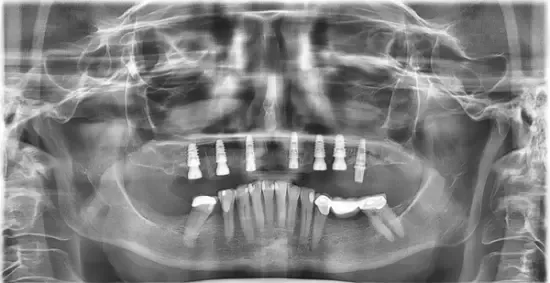
When most or all teeth in an upper or lower arch are missing or failing, four or more implants can support a full set of teeth.
Implant-supported denture A full arch of teeth held by several implants. Depending on the design, it can be fixed in place or removable.
The implant is the root. The restoration is the part that replaces the tooth itself, and it is the second half of the treatment. Some patients ask about same-day implants, where a temporary tooth is placed at the same visit. That is possible for some cases, not all.
The process
From first visit to finished smile.
Exam and imaging
We examine your teeth and gums and take detailed 3D scans of your jaw. Our Stamford office uses a handheld intraoral scanner and a CBCT scanner, so you can see exactly what we see.
Preparation, if needed
A tooth that cannot be saved may need a gentle extraction first. Some cases also need bone grafting. Your plan lists every step in order.
Implant placement
The area is cleaned and numbed, and the implant is placed in the bone.
Healing
Over about three to six months, the implant bonds with your jawbone. We see you for follow-up visits along the way.
About 3 to 6 months
Impressions and fittings
A few weeks after placement, we check your healing, then take images and impressions that go to a dental lab. Bridges and dentures often need more than one fitting so the final result fits perfectly.
Final restoration
When your mouth has healed fully, your custom crown, bridge or denture is checked once more and attached, and we check your bite and fit.
Recovery
1 to 2 weeksMost people heal from the placement visit in this time.
3 to 6 monthsThe time the implant itself needs to bond with the bone.
Every 6 monthsAbout how often regular cleanings keep your implants healthy.
While you heal
Stick to soft foods and clean the area gently with a soft-bristled brush. We give you written instructions, and following them closely protects the result.
After healing
Care is much like caring for natural teeth: brush twice a day, floss daily, and avoid chewing ice or hard candy.
Real patients
Before and after.
Before
After
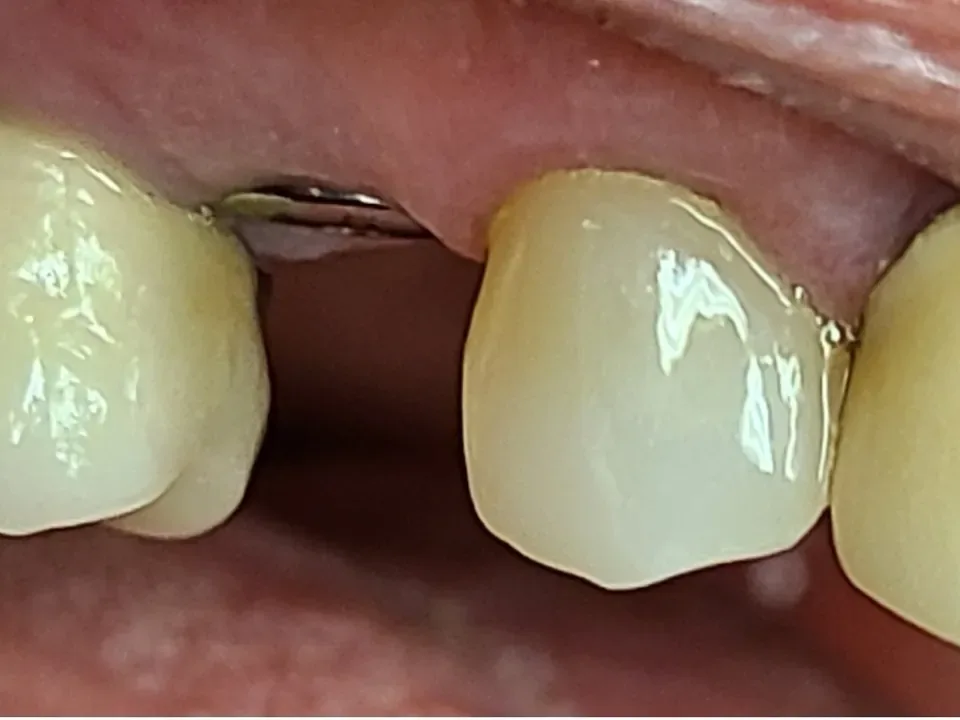
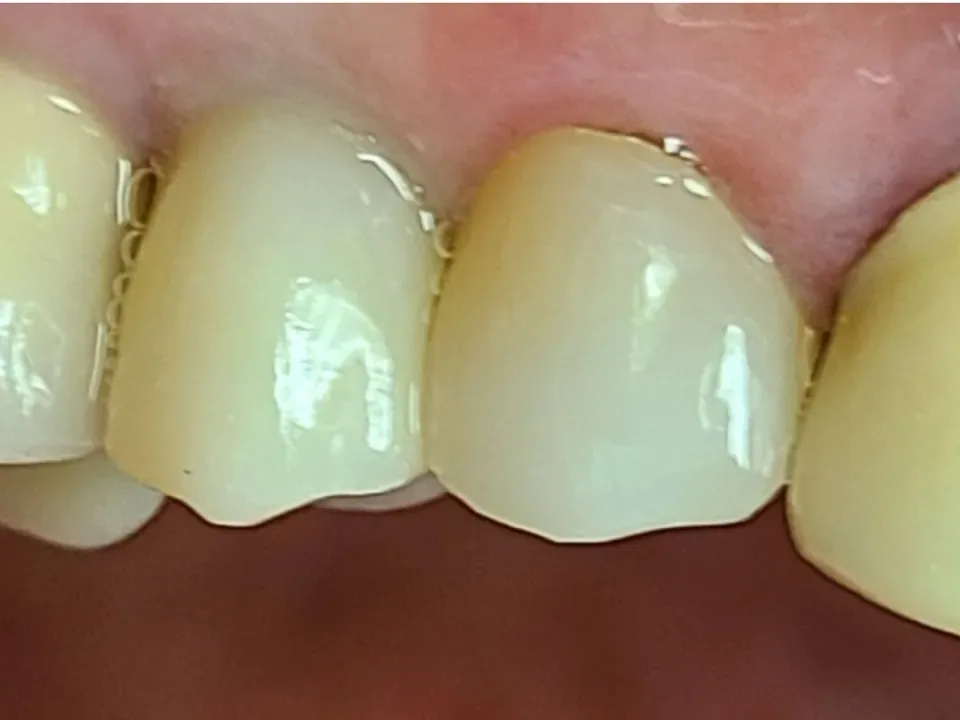
A missing tooth replaced with an implant crown.
Before
After
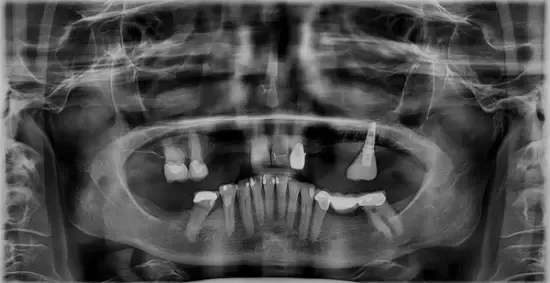
An X-ray before and after full-arch implants.
In their own words.
An implant and crown for a front toothHumberta C., Kent: a front tooth implantHer implant, three and a half months later
The area is numbed during treatment, and most patients find it more manageable than they expected. We explain what to expect afterward and how to stay comfortable.
How long does an implant last?
An implant in healthy bone, cared for well, is meant to last many years. The crown may need replacing eventually.
How long does the whole process take?
Healing takes several months, so the full process is measured in months, not weeks. Your plan gives you a timeline for your case.
Can I get an implant if I have gum disease or bone loss?
Often yes, after preparation. Gum disease usually needs treatment first, and bone loss may call for a graft. Your exam tells us which applies.
What will it cost, and does insurance help?
Cost depends on your case, and we give you a written estimate before treatment. See our insurance and financing page.