Porcelain veneers
What happens to teeth under veneers
Veneers change how a tooth looks, but the tooth underneath is still yours and still needs care. Here is what to know.
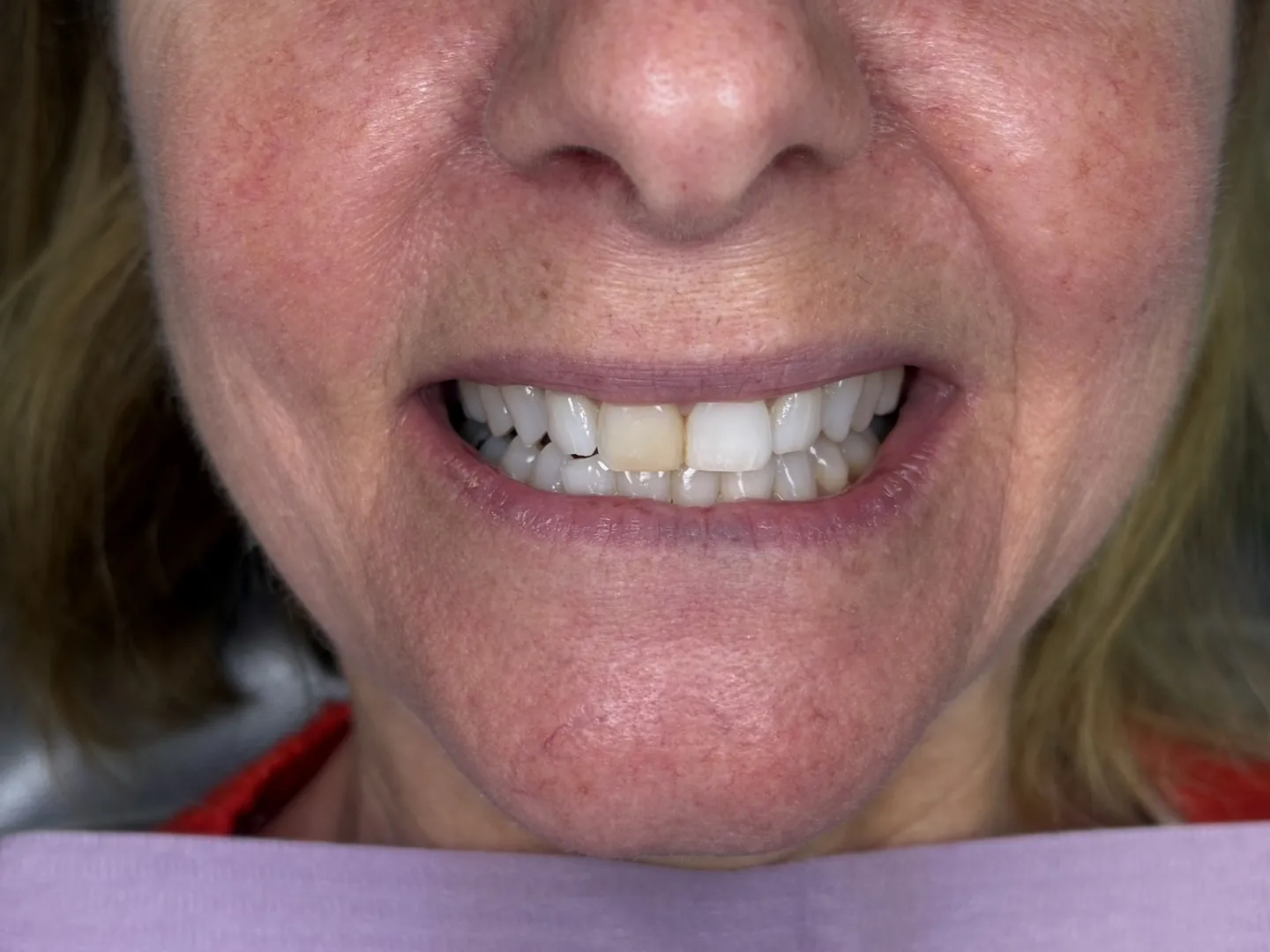
What happens when veneers are placed
For most porcelain veneers, a thin layer of enamel is gently removed from the front of the tooth. This makes room so the veneer does not look bulky and gives the bonding material a good surface to grip. The amount is small, and your dentist plans it carefully, but it is permanent. Enamel does not grow back, so a tooth that has been prepared for a veneer will need to stay covered.
The veneer is then bonded to the tooth with a strong dental cement. When the fit is good and the bond is sealed all the way around, the veneer and the tooth work together as one unit.
Veneers do not stop decay
A common surprise: veneers are not a shield against cavities. The porcelain itself cannot decay, but the tooth underneath can, especially along the gum line and at the edges where the veneer meets natural tooth. Plaque can still build up there. If it is not cleaned away, you can get decay, gum inflammation, and sensitivity.
That is why daily care matters just as much after veneers as before them.
Caring for your veneers and teeth
A few habits make a real difference:
- Brush twice a day with a soft toothbrush and a non-abrasive toothpaste
- Floss daily, especially around the edges of each veneer
- Do not bite ice, pens, fingernails or other hard objects
- Wear a mouthguard for sports, and ask about a night guard if you grind your teeth
- Go easy on foods and drinks that stain natural teeth next to your veneers
Porcelain resists staining well, but the natural teeth beside it do not, and the edges of a veneer can pick up color over time.
Why checkups matter
Regular visits let your dentist look at the edges of each veneer, check the teeth and gums underneath, and catch small problems before they grow. Professional cleanings also remove buildup that is hard to reach at home. Our preventive care visits are a good fit for this.
When veneers need attention
Veneers can chip or loosen, and gums can recede and reveal the edge of a veneer. Decay under or beside a veneer may also need repair. If you notice a rough edge, a change in color, new sensitivity or a veneer that feels loose, let your dentist know soon. Small fixes are easier than big ones.
How long veneers last depends on your teeth, your habits, your bite and how well you care for them. Many last a long time with good care, but no one can promise a number.
Is it right for you
Because veneers are permanent, it is worth asking questions before you decide. We are happy to explain the process on our porcelain veneers page and at a consultation, including whether a less invasive option might meet your goals.
Thinking about veneers or already have them? Book a consultation and we will check how your smile is doing.